

 CHINA
CHINA Malaysia
  한국
한국  USA
USA  Canada
  United Kingdom
  Deutschland
  México
  Brasil
  Česká republika
  France
  España
 The Impact of RoHS and DFARS (The Berry Amendment)
Download this WhitepaperThe Fastener Industry is always evolving.
Over the past few months there has been a bit of confusion and concern regarding two requirements that have recently become enforced policies; RoHS and DFARS (The Berry Amendment). These two policies may confuse some, but for SPIROL, adapting to requirements like these and leading the industry through such changes is business as usual.
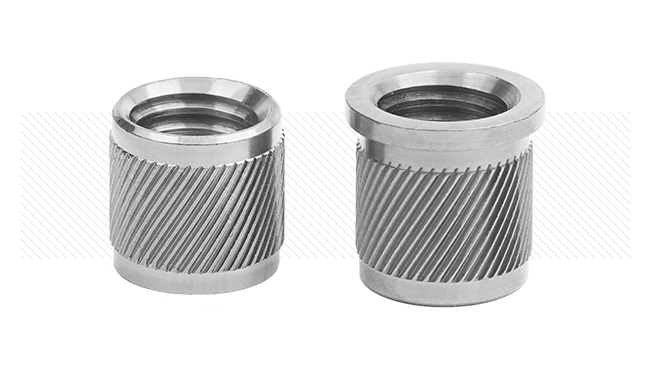
SPIROL International is a global manufacturer of engineered components for fastening and joining. Products include Coiled and Slotted Spring Pins, Solid Pins, Threaded Inserts, Spacers, Bushings, and Alignment dowels. These products can be found in applications all over the world, ranging from cosmetic cases and cell phones to automobiles and military tanks.
RoHS
The RoHS Directive stands for “the restriction of the use of certain hazardous substances in electrical and electronic equipment”. This directive will prevent new electrical and electronic equipment (EEE) that contain excessive levels of lead, cadmium, mercury, hexavalent chromium, polybrominated biphenyl (PBB) and polybrominated diphenyl ether (PBDE) flame retardants from being placed on the European Union (EU) market starting July 1st, 2006.
Although RoHS is a EU directive, manufacturers of EEE outside Europe must also abide by this legislation if the equipment they produce is ultimately imported into an EU member state.
“Failure to comply with the requirements of the UK’s RoHS Regulations will result in the removal of manufacturers’ products from the market place. In addition, those held responsible face, on summary conviction, a term of imprisonment not exceeding three months and/or a fine of up to £5,000. Where any offence is tried on indictment, the maximum penalties are a term of imprisonment of up to two years and an unlimited fine. Where an offence by a corporate body is shown to have been committed with the consent, connivance or through neglect of any director, manager or similar officer of the corporate body, they shall be regarded as having committed the offence as well as the corporate body.” (Dionics- www.pb-free.info)

Sounds pretty serious. In the UK, the National Weights and Measures Laboratory has been awarded the contract to set up the national enforcement body. Manufacturers will be expected to exercise ‘due diligence’ to ensure none of the restricted substances are present in each homogeneous (component) element of the equipment manufactured or supplied.
The plain products manufactured by SPIROL do not violate any of these restrictions. The problem arises when plating is requested. In most cases, plating is specified to provide corrosion protection for the component. For the products that SPIROL International manufactures, the most common plating used has been zinc plating with a chromate conversion. This plating does not meet the RoHS requirement. Because RoHS is a purchasing requirement, the OEM or Distributor MUST specify whether or not that plating needs to meet the requirements of RoHS. By specifying this requirement, SPIROL International will provide a RoHS compliant plating that meets the requirements. Understanding the requirements of the end user is critical in providing a plated item that meets their needs.
Not all items need to be RoHS compliant, but for the ones that do, SPIROL Distribution is the supplier that can provide the best quality product to meet the requirements of almost every application.
DFARS
Another enforced Purchasing requirement is known as DFARS “Defense Federal Acquisition Regulation Supplement”.
This requirement is inline with the “Buy American Act of 1933”; the statute that governs procurement by the Federal Government. This clause requires that any “SPECIALTY METALS” (defined below) incorporated in hardware under Department of Defense contracts must be MELTED in the USA or a “QUALIFYING COUNTRY”.
The DFARS requirement is a PURCHASING REQUIREMENT, not a Military (MS/NAS) Specification requirement. This means that if a customer orders a standard MS part, and does not request DFARS compliance, it does not have to comply with the DFARS requirement. Much like the RoHS requirement, this special purchasing requirement must be identified at the time of purchase on the Purchase Order. SPIROL International will then add this compliance to the MS Certificate of Conformance.
DFARS SPECIALTY METALS
- Steel* with a maximum alloy content exceeding one or more of the following limits:
- manganese 1.65%; silicon 0.60%; or copper 0.60%; or:
- containing more than 0.25% of any of the following elements: aluminum, chromium, cobalt, columbium, molybdenum, nickel, titanium, tungsten, or vanadium.
- Titanium and titanium alloys
- Zirconium and zirconium-base alloys.
* This only applies to SPIROL’s 420 S/S and 302 S/S material; not carbon steel.
SPIROL has been leading the engineered fastener industry for over 55 years. With an engineering staff and quality department that is second to none, SPIROL Distribution, the distribution arm of SPIROL International, is backed by experts in their field ready to address every issue, and offer assistance to their vast customer base.
SPIROL International’s mission is to “Set the standard for product quality, service and value by exceeding customer expectations.” With the expectations and continuous evolution in the fastener industry, it is critical to conduct business with a company such as SPIROL who is continuously improving and providing answers to new challenges.