

 CHINA
CHINA Malaysia
  한국
한국  USA
USA  Canada
  United Kingdom
  Deutschland
  México
  Brasil
  Česká republika
  France
  España
 Type 316 Stainless Steel Coiled Spring Pin Comparison
By
Download this WhitepaperA closer look into Type 316 as compared to Type 302/304 and common uses.
The versatility of Coiled Spring Pins often times makes them the ideal fastener to meet the specific engineering and economic objectives of pinning applications. They are available in a wide variety of sizes, duties, finishes, and materials. Amongst the materials used to manufacture Coiled Spring Pins, stainless steel is often required for its high corrosion resistance. Coiled Spring Pins are most often manufactured from Type 302/304 and Type 420 stainless steel, but Type 316 is also available and is typically selected for its superior corrosion resistance. This paper takes a closer look at how Type 316 compares to Type 302/304, and discusses various applications and environments where it offers an advantage.
Chemical Composition
Even though Type 302 and Type 304 stainless steel are technically two different materials, they closely overlap in their chemical composition and properties. Because of this, steel mills can melt the material such that they meet both Type 302 and Type 304 specifications. Therefore, manufacturers refer to austenitic Spring Pins as Type 302/304 and this naming convention will be used throughout this paper.
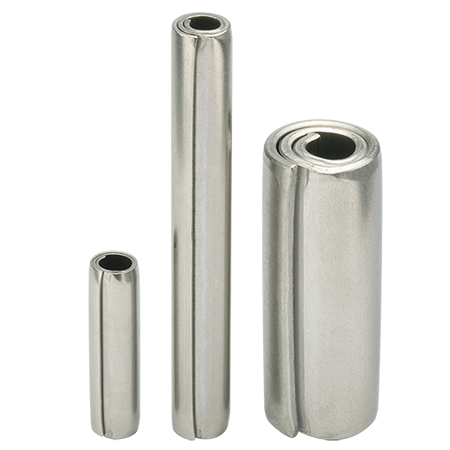
Table 1 compares the chemical composition of the austenitic stainless steel types used for Coiled Spring Pins. Austenitic refers to the structure of the metal, and classifies the stainless steel as not heat treatable, non-magnetic at the fully annealed state, and having the ability to work-harden.
Before going into specifics on Type 316, it will help to first briefly explain how Type 302 and Type 304 are alloyed, and what allows for each one to attain its corrosion resistance.
| Chemical Composition % | Type 302 | Type 304 | Type 316 |
| C | 0.15 | 0.08 | 0.08 |
| Mo | — | — | 2 – 3 |
| Cr | 17 – 19 | 18 – 20 | 16 – 18 |
| Ni | 8 – 10 | 8 – 10.5 | 10 – 14 |
*Single values are maximum values
Table 1
Chemical composition (%) of austenitic stainless steel grades used for SPIROL Coiled Spring Pins
Each of the 300 series stainless steels shown in Table 1 are alloyed with more nickel than Type 420 stainless steel, and have higher chromium content. (Type 420 stainless has 0.5% nickel and 12–14% chromium.) This enables 300 series stainless steel to have higher resistance to corrosion, namely pitting and stress corrosion cracking. Additionally, the 300 series stainless steels have less carbon content than some other types of stainless steel, which helps them to have higher corrosion resistance by reducing the ability for carbides to form at grain boundaries and ultimately cause intergranular corrosion (known as sensitization).
The main composition difference between Type 316 and Type 302/304, is that Type 316 is alloyed with 2-3% molybdenum, which increases resistance to pitting corrosion by improving the passive film durability. The passive film, typically an oxide, is a “clear, invisible” layer on the metal surface that improves corrosion protection. The addition of molybdenum also increases the strain on the crystalline lattice structure, forcing the molecules closer together, and thus increasing the energy required for iron atoms to dissolve out and reach the surface. Molybdenum has a similar effect as chrome does on the microstructure, which is why Type 316 does not need as much chrome as Type 302/304. In order to maintain the austenitic structure in stainless steels containing molybdenum, the nickel content must be increased. As seen in Table 1, the nickel content range for Type 316 is 10–14% versus 8–10.5% for Type 304 and 8–10% for Type 302.
Corrosion Resistance
While the 300 series austenitic stainless steels have physical and strength properties that make them suitable for many applications, their ability to resist many different corrosive environments, both chemical and atmospheric, is usually considered the most important and main reason for their selection. All 300 series stainless steels are considered to have high corrosion resistance, but Type 316 is known to be one of the most corrosion resistant. While Type 302/304’s corrosion resistance meets most application requirements, they tend to corrode in more severe environments where Type 316 does not, such as in seawater and petrochemical environments. There are multiple types of corrosion and it is important to understand each type and how Type 316 may offer an advantage.
Galvanic Corrosion
This type of corrosion occurs between two dissimilar metals when they are in contact and immersed in an environment where the metals react electrically and chemically to each other. It is important to consider the galvanic series (see Table 2) to ensure that the material does not corrode when exposed to the mating material. For example, when two alloys are touching in seawater, corrosion will occur in the alloy lower in the series. The further the two metals are away from each other in the galvanic series chart, the more likely they are to corrode when immersed in an electrolyte.
Pitting Corrosion
Pitting corrosion is a very localized type of corrosion which leads to the creation of small spots and eventually holes in the material. Any type of crack or even a small scratch can cause the onset of pitting corrosion and lead to failure (See Figure 1) Pitting can readily occur in seawater for Type 302/304, which is why Type 316 is often used. The addition of molybdenum significantly enhances the resistance to pitting corrosion.
Type 316 is typically known for having advantages over Type 302/304 in chloride rich environments such as seawater, which is why it is also referred to as marine grade stainless steel. There are also several caustic environments detailed in Table 3 where Type 316 can offer enhanced corrosion resistance.
|
Marine water |
Sulfurous acid Tartaric acid Acetic acid Formic acid Lactic acid Misc. organic acids Corrosion by foods |
Table 3
Environments where Type 316 offers enhanced corrosion resistance over Type 302 and 304
|
⇑ |
Platinum Gold Graphite Titanium 316 Stainless steel (passive) 304 stainless steel (passive) Inconel (80Ni-13Cr-7Fe) (passive) Nickel (passive) |
| Increasingly inert (cathodic) |
Monel (70Ni-30Cu) Copper-nickel alloys Bronzes (Cu-Sn alloys) |
| || | Copper Brasses (Cu-Zn alloys) Inconel (active) Nickel (active) |
| Increasingly active (anodic) |
Tin Lead |
| ⇓ | 316 Stainless steel (active) 304 Stainless steel (active) Cast Iron Iron and steel aluminum alloys Cadmium Comercially pure aluminum Zinc Magnesium and magnesium alloys |
Table 2
The Galvanic Series1

Figure 1
Cross section of pit demonstrating impact on cross-sectional area and reduction in strength
Stress Corrosion Cracking
Stress corrosion cracking (SCC) is a cracking process that can only occur if the material is in a corrosive environment and under sustained tensile stress. Without one of the two conditions, SCC cannot occur. For 300 series stainless steels, Yield Strength, MPa (ksi) Hardness, max (HRB) 515 (75) 515 (75) 515 (75) 205 (30) 88 chloride stress corrosion cracking is one of the more common types and known to influence the structural integrity of the material. There are many factors that can impact SCC, including applied and residual stress, temperature, and cyclic conditions of the application.
There are many reports and studies that have been completed to analyze the impact of SCC on austenitic stainless steels, but because of the many variables and factors, such as stresses, chemical composition, and environmental conditions, it is difficult to apply a “one size fits all” correlation amongst the various types of stainless steel and how they will react. Therefore; it is important to perform testing for the specific application requirements.
Here is a list of a few chloride solutions that may cause SCC of 300 series stainless steel2:
- Ammonium chloride
- Calcium chloride
- Cobalt chloride
- Lithium chloride
- Magnesium chloride
- Mercuric chloride
- Sodium chloride
- Zinc chloride
Intergranular Corrosion
This type of corrosion is not typically a concern for 300 series stainless steel since it involves holding the pins to high temperature (beyond 800ºF/430ºC) for extended periods of time. However, this is a concern for other products manufactured from 300 series stainless that need to welded or brought to high temperatures. 300 series stainless Coiled Spring Pins are not heat treated, and are not recommended for welding and therefore, intergranular corrosion seldom occurs since they are not exposed to the high temperatures.
Mechanical Properties
Since 300 series (and all austenitic) stainless steels can become hardened by cold working, they exhibit a wide range of mechanical properties. Cold working the material changes the hardness, and magnetism of 300 series stainless steels. Table 4 below displays mechanical properties for austenitic Types 302, 304 and 316 stainless steels in the annealed state.
| Type 302 | Type 304 | Type 306 | |
| Tensile Strength, MPa (ksi) | 515 (75) | 515 (75) | 515 (75) |
| Yield Strength, MPa (ksi) | 205 (30) | 205 (30) | 205 (30) |
| Hardness, max (HRB) | 88 | 88 | 95 |
Table 4
Minimum room-temperature properties, annealed state3
Magnetism
When any of the 300 series stainless steels are fully annealed, they are non-magnetic, and increase in magnetism as they are work hardened. Type 302/304 exhibits stronger magnetic permeability as a result of work hardening.
Cost and Availability
For Spring Pins, Type 302/304 is the most widely used austenitic stainless steel and for that reason, they are typically procured in larger quantities as compared to Type 316. Thus, Type 302/304 stainless steel Spring Pins typically cost less and are readily available.
Applications
There are many applications that may require higher corrosion resistance than Type 302/304 provides. Some of them are detailed in Table 5. Type 316 stainless steel Coiled Spring Pins reduce the pitting corrosion that occurs in these applications since they are subjected to various harsh chemicals (see Table 3).
| Applications | Industries |
|
Assemblies exposed to marine environment |
Chemical, pharmaceutical industry Paper industry digesters, evaporators and handling equipment Medical Industry Textile refining equipment Photographic film Petroleum refining equipment |
Table 5
Applications and Industries that use Type 316 Stainless Steel Coiled Spring Pins (Note: Type 302/304 may be sufficient)
Conclusion
Coiled Spring Pins can be manufactured out of many types of materials, including multiple grades of stainless steels. Type 302/304 stainless steels are common choices for their high corrosion resistance. In environments where the corrosion resistance of Type 302/304 may not be sufficient, such as in a marine environment where the pin is exposed to chlorides, Type 316 may be a better choice since pitting corrosion does not occur as readily. Type 316 is typically higher in price than Type 302/304, but the added corrosion resistance helps ensure that critical components stay intact and do not cause additional damage to surrounding parts. For many engineering teams, the added security is worth the higher component cost, especially when dealing with hazardous and dangerous chemicals.
Because of the complexity and many variables that characterize corrosive environments, such as the type of chemicals and concentration, stress on the material, atmospheric conditions, and time and temperature, it is always important to conduct testing when making material selections for fasteners such as Coiled Spring Pins to ensure the material will yield the desired results.
Proper material selection is one of the most important design criteria for engineers because it dictates final cost, field life, and performance of the end product. There are many types of materials to choose from, and when it comes to selecting fastener materials, companies that are experienced in fastener design can help determine the most appropriate material.
1M.G. Fontana, Corrosion Engineering. 3rd Edition. Copyright 1986 by McGraw-Hill Book Company.
2The International Nickel Company, Inc. 1963. “Corrosion Resistance of the Austenitic Chromium-Nickel Stainless Steels in Chemical Environments.”
3Metals Handbook. Desk Edition, 2nd Edition. 1998. ASM International


316 Coiled Spring Pin in Stainless Steel Locking Boat Latch